$67 Billion in Four Days: Inside ADIPEC 2026
Four days, 240,000 visitors and $67 billion in deals. AURA 919 was on the floor at ADNEC, building stands and running the technology behind them.
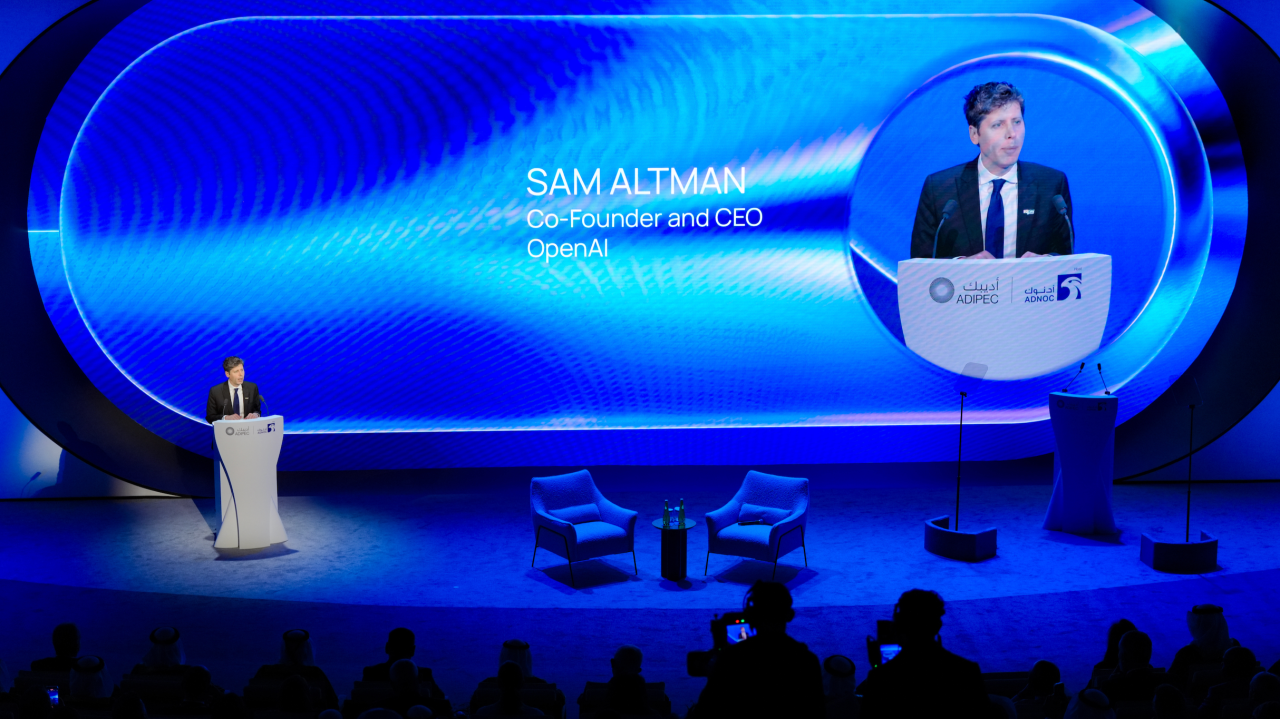
ABU DHABI, 6 November 2026. On Monday morning, the most talked-about guest at the world’s largest energy show did not run an oil company. Sam Altman, chief executive of OpenAI, walked onto the opening stage in Abu Dhabi and was asked what single challenge the world faces today. His answer was one word: “Energy.”
For the next four days, the industry answered back. Ministers, oil majors, chipmakers, robot builders, shipping lines and financiers filled 16 halls at ADNEC, from the first coffee at 10am to the last handshake after 6pm. When the doors closed on Thursday, more than 50,000 deals worth an estimated $67 billion had been sealed, up 26.4% on last year’s $46 billion. Some 240,000 people from 170 countries had come through the gates.
This was not a trade show in the old sense. It was a four-day negotiation over how the world keeps the lights on after the most disruptive year the energy market has seen in decades, and who gets to power the AI boom that is now driving demand. AURA 919 was there for all of it, on the build floor before the doors opened and behind the screens until they closed.
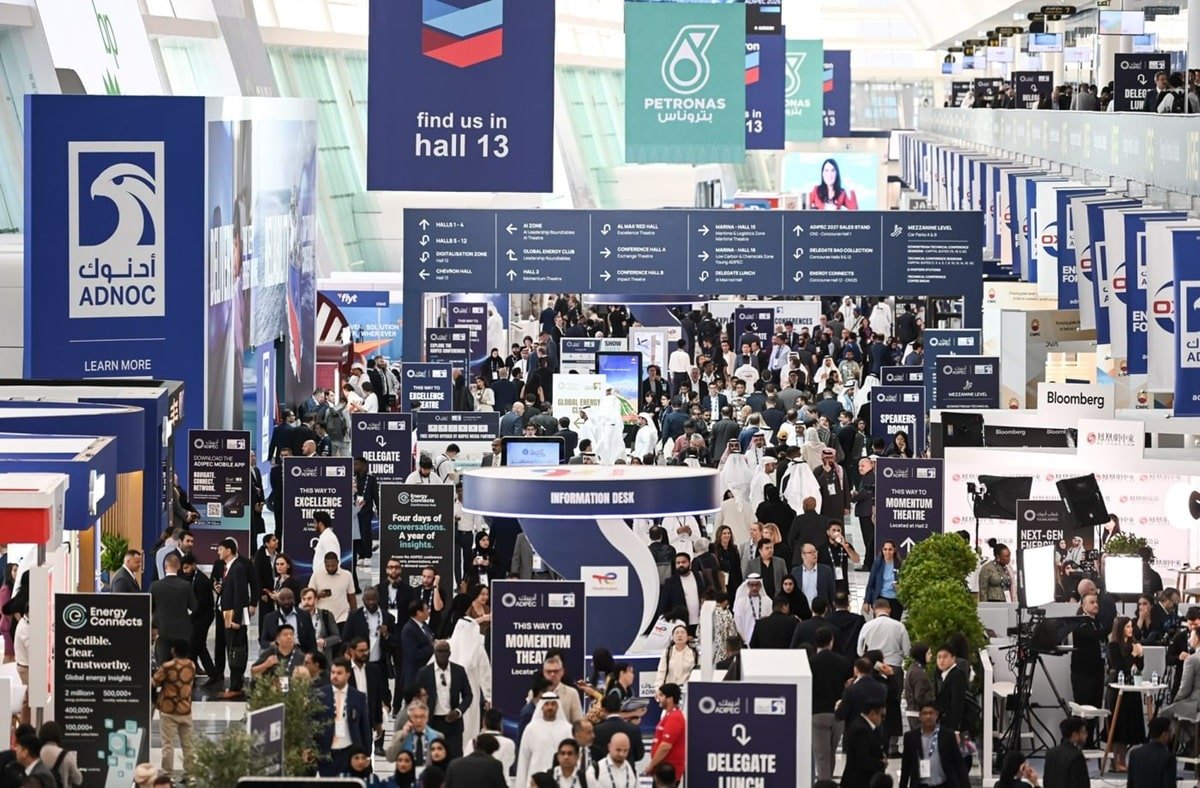
Monday: A Keynote Written for a Hard Year
The 42nd edition of ADIPEC opened on 2 November under the patronage of President His Highness Sheikh Mohamed bin Zayed Al Nahyan, hosted by ADNOC. His Highness Sheikh Mansour bin Zayed Al Nahyan, Vice President, Deputy Prime Minister and Chairman of the Presidential Court, inaugurated the event. To make room for more exhibitors, the opening ceremony moved out of the halls and into the Abu Dhabi Energy Centre.
The tone was set by HE Dr Sultan Al Jaber, UAE Minister of Industry and Advanced Technology and ADNOC Managing Director and Group CEO. He did not open with growth targets. He opened with damage. Close to one billion barrels of crude, he told the room, had been drawn from global inventories since the disruption in the Strait of Hormuz.
His prescription came in five parts:
- Accessible supply. Bigger strategic storage, larger product stockpiles and flexible refining closer to customers.
- Routes to market. Infrastructure built before it is needed, backed by advanced logistics.
- Operational intelligence. A move from automated operations to AI systems that anticipate risk.
- Capital follows confidence. Policy, finance and insurance working together to keep trade moving.
- People. The priority he called the most important of the five.
Al Jaber argued the UAE’s resilience was planned years before the crisis, not improvised during it, and said ADNOC’s goal is to become the most customer-centric energy company on earth. His closing message to the room: “when it counts the most, you can count on the UAE.”
The Altman Moment
Then came the guest everyone had been waiting for. In a speech and on-stage interview, Altman framed AI and energy as two sides of one equation. AI, he said, can make power systems more efficient and reliable, speed up materials science and help design better energy infrastructure. But AI’s own rapid growth will need far more electricity than the world produces today.
He called the UAE the most forward-looking country in the world for AI adoption, noting that the country went all in on the technology from the launch of ChatGPT, across government and the wider economy. He pointed to the partnership between ADNOC, G42 and OpenAI as a model for putting frontier AI to work on real industrial problems. For a room of drillers and refiners, it was a clear signal: the AI industry now sees energy companies as its most important partners.
The Panels That Followed
The first ministerial session framed energy security as national security. HE Suhail Mohamed Al Mazrouei, UAE Minister of Energy and Infrastructure, called for extra layers of protection and spare capacity, and said AI would be needed to design more resilient systems. He shared the stage with Dr Ekperikpe Ekpo, Nigeria’s Minister of State for Petroleum Resources (Gas).
The opening CEO panel brought together Meg O’Neill of bp, Richard Jackson of Oxy and Markus Krebber of RWE to discuss how to build systems that absorb shocks. Jackson said Oxy’s answer to a year of disruption has been durability: steady cash flow, steady production and investment in assets built to last.
Across the week, the speaker list read like a who’s who of global energy, including Wael Sawan of Shell, Patrick Pouyanné of TotalEnergies, Claudio Descalzi of Eni, Lorenzo Simonelli of Baker Hughes, Olivier Le Peuch of SLB, Dr Roland Busch of Siemens, Christian Bruch of Siemens Energy and Aliko Dangote of the Dangote Group. More than 40 ministers and policymakers attended, from Germany, Canada, Egypt, Austria, Japan, Kazakhstan, Nigeria and beyond.
Inside the Halls: A Sold-Out Floor
If the conference stage told the story of risk, the exhibition floor told the story of appetite. ADIPEC 2026 was the largest exhibition in the event’s history by floor space: 2,260 companies across 16 halls, 30 country pavilions and four specialised zones covering AI, Digitalisation, Low Carbon and Chemicals, and Maritime and Logistics. The venue sold out, and extra exhibition structures had to be built to fit everyone who wanted in.
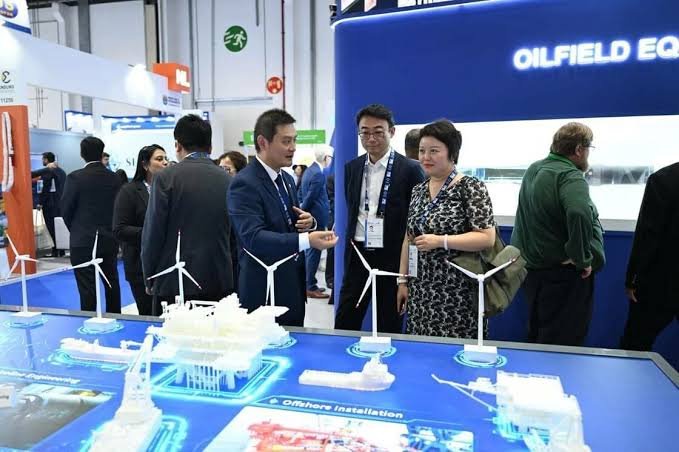
China, the United States and Italy fielded the most exhibitors. Asia sent its strongest delegation ever, with 353 exhibiting companies, up 12% on last year, and national pavilions from China, India, Japan, Malaysia, Singapore and South Korea. At the India Pavilion, Hindustan Petroleum told reporters it had come to build global partnerships, with AI now central to how it runs its assets. Iraq’s RQC used the show to present a century of Iraqi oil expertise to new partners.
Hall 13: Where the Robots Were
Some of the most-watched aisles were not around drilling equipment. They were in Hall 13, home of the AI Zone, which grew 20% on last year and was co-hosted by AIQ. Humanoid robots worked the floor while Microsoft, NVIDIA, IBM, Dell, Huawei, Honeywell, Siemens, Unitree, Presight, AIQ and e& showed how AI is moving from slide decks into control rooms.
The stand-out demos were practical, not theatrical:
- Gecko Robotics showed its Raptor inspection robot, built to scan critical infrastructure for faults.
- Honeywell showcased Honeywell Forge Upstream, an AI platform for oil and gas field operations.
- Synectics showcased intelligent surveillance for high-risk energy sites.
Across the halls, the message was the same. Schneider Electric’s Georges El Mir pointed to the company’s research showing 76% of Middle East energy leaders raised investment in autonomous technology over the past year. IEC Telecom argued that none of it works offshore without resilient connectivity. China’s Jereh Global said it was repositioning from equipment maker to advanced technology company. The industry that once sold steel is now selling intelligence.
The world was watching too. Nearly 1,000 journalists and content creators covered the event, up 14% on 2025, a record for ADIPEC.
The Deal Room
Behind the stands, in meeting rooms and on the sidelines of panels, the real business of the week got done. More than 50,000 agreements were struck over four days. A few defined the week:
- ADNOC, OpenAI and G42. The landmark AI partnership was the headline announcement of the show, the clearest sign yet that energy and AI are merging into one industry.
- XRG and Shell. ADNOC’s international investment arm agreed a $1.5 billion deal to acquire Shell’s stake in Australia’s North West Shelf LNG project, deepening the UAE’s gas links with Asia-Pacific.
- TA’ZIZ. Financial close on AED 5.1 billion for the TA’ZIZ Terminal and TA’ZIZ Ammonia projects in Ruwais, with both transactions oversubscribed, a strong vote of investor confidence in Abu Dhabi’s industrial strategy.
- Department of Energy Abu Dhabi and Evolve Fuels. A strategic collaboration to explore e-SAF production, clean jet fuel made from renewable power.
- NMDC Group. Five strategic agreements signed at the show.
Beyond the headline deals, delegations used the week to open new markets. Spanish energy firms highlighted openings in the UAE market. Arab regional players such as Iraq’s RQC came looking for partners. For thousands of smaller suppliers, the measure of success was simpler: a full meeting diary and a pipeline worth following up.
Thursday: The Scorecard
By the time the halls emptied on 5 November, ADIPEC 2026 had set new records for deals, exhibitors, Asian participation and media coverage.
| Metric | ADIPEC 2026 | Context |
|---|---|---|
| Deals signed | 50,000+ | Up from 35,000 in 2025 |
| Estimated deal value | $67 billion | Up 26.4% on $46 billion in 2025 |
| Attendees | 240,000 | From 170 countries |
| Exhibiting companies | 2,260 | Largest ever, venue sold out |
| Halls and pavilions | 16 halls, 30 pavilions | Plus 4 specialised zones |
| Asian exhibitors | 353 | Up 12%, strongest ever |
| Ministers and policymakers | 40+ | From every major energy region |
| Speakers and sessions | 1,800+ speakers, 380+ sessions | Across 13 conference programmes |
| Media and creators | Nearly 1,000 | Up 14%, a record |
Abdulmunim Saif Al Kindy, Chairman of ADIPEC 2026, said the week had been defined by resilience and intelligence, and that the scale of what was agreed mattered most against the backdrop of this year’s challenges. In his words, the event exists to “connect energy, technology and capital to turn ambition into action.”
The takeaway from four days at ADNEC was blunt. Expanding supply alone will not secure the energy future. It will take coordinated investment in infrastructure, technology and partnerships, and the companies that showed up ready to talk about all three were the ones doing deals.
On the Floor with AURA 919
Every one of those 50,000 deals started the same way: someone stopped walking. In a sold-out venue with 2,260 companies competing for the same 240,000 visitors, the stand is where that first decision gets made.
At ADIPEC 2026, AURA 919 delivered stand builds and technology support for exhibitors at ADNEC. Our teams were on site through build-up, all four show days and breakdown, covering:
- Stand design and buildCustom structures engineered for a venue running at full capacity, with tight build windows and strict safety rules.
- LED and digital technologyVideo walls and screens running live content for four straight days.
- AV and lightingSound for demos and stand talks, and lighting that makes a brand readable from across the hall.
- Branding and graphicsLarge-format graphics and wayfinding that tell one clear story from the aisle.
- On-site technical supportA team on call so that when a screen or system needs attention, it is fixed before a visitor notices.
What This ADIPEC Taught Exhibitors
The 2026 edition raised the bar for every exhibitor in the building. Four lessons stood out from the floor:
- Technology is now the baseline. With humanoid robots in Hall 13 and an OpenAI keynote on day one, visitors arrived expecting live demos and real data. A printed backdrop and a brochure rack no longer compete.
- One message wins the aisle. The stands that pulled people in led with a single clear idea, visible from 20 metres, not a wall of logos and product names.
- Four days is a marathon. Screens, lighting and interactive content have to run flawlessly from Monday morning to Thursday close. Reliability is part of the brand.
- Design for meetings, not just footfall. In a week of 50,000 deals, the most valuable square metres were the quiet ones: meeting rooms and seating where a conversation could turn into a contract.
“ADIPEC 2026 proved that energy is now a technology story. Our job is to make sure our clients look like they belong in it, from the first sketch to the last screen switching off on day four.”
Royal Asshraf, Founder, AURA 919
Since 2009, AURA 919 has built more than 200 stands for over 50 brands across the UAE, Saudi Arabia and Qatar, at venues including ADNEC, DWTC, Expo City Dubai and RICEC Riyadh, for shows from ADIPEC and GITEX Global to Arab Health, Gulfood, WETEX and LEAP.
What Comes Next
ADIPEC returns to ADNEC Abu Dhabi from 1 to 4 November 2027. If 2026 is any guide, the floor will sell out again, Asia will grow again and the bar for stand technology will rise again.
The exhibitors who stand out next year will not be the ones who start planning in September. Prime positions, build slots and the best crews go early. The design conversation for ADIPEC 2027 starts now. Book a 30 Minute Call with our team.
Practical Details
ADIPEC 2026: 2 to 5 November 2026, ADNEC Centre Abu Dhabi
Hosted by: ADNOC, under the patronage of President His Highness Sheikh Mohamed bin Zayed Al Nahyan
Next edition: ADIPEC 2027, 1 to 4 November 2027, ADNEC Centre Abu Dhabi
Official website: adipec.com
More from the AURA 919 exhibition desk:
FAQ
When and where did ADIPEC 2026 take place?
ADIPEC 2026 ran from 2 to 5 November 2026 at ADNEC Centre Abu Dhabi, hosted by ADNOC.
How big was ADIPEC 2026?
It welcomed 240,000 attendees from 170 countries and 2,260 exhibiting companies across 16 halls and 30 country pavilions, with more than 50,000 deals worth an estimated $67 billion.
Did Sam Altman speak at ADIPEC 2026?
Yes. OpenAI CEO Sam Altman gave a speech and on-stage interview at the opening ceremony on 2 November, focused on the link between AI and energy demand.
When is ADIPEC 2027?
ADIPEC 2027 is scheduled for 1 to 4 November 2027 at ADNEC Centre Abu Dhabi.
Does AURA 919 build exhibition stands at ADNEC?
Yes. AURA 919 delivered stand builds and technology support at ADIPEC 2026 and builds stands across the UAE, Saudi Arabia and Qatar, including ADNEC, DWTC and Expo City Dubai.
When should I start planning my ADIPEC 2027 stand?
Now. ADIPEC 2026 sold out, so the best positions, build slots and crews for 2027 will be booked early. Start the design conversation 9 to 12 months before the show.
Planning for ADIPEC 2027?
From the first sketch to the last screen switching off, we build stands that stop the aisle.
Book a 30 Minute Call WhatsApp UsAURA 919. Built to Be Seen.